Source Changeover Switches

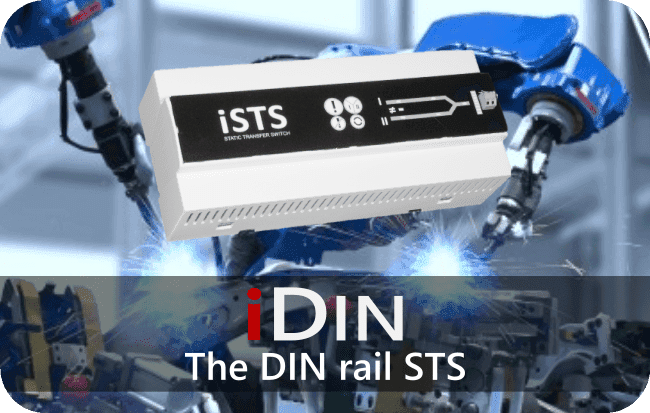
Static Transfer Switches


Overview of Static Transfer Switches (STS)
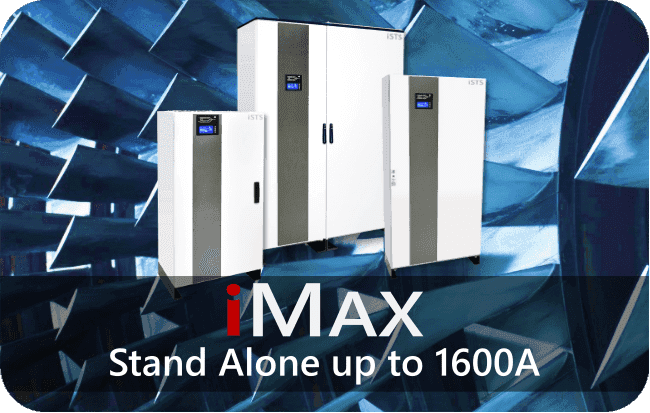
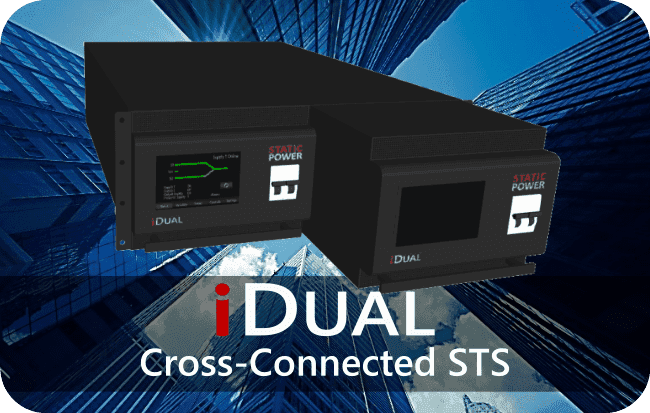
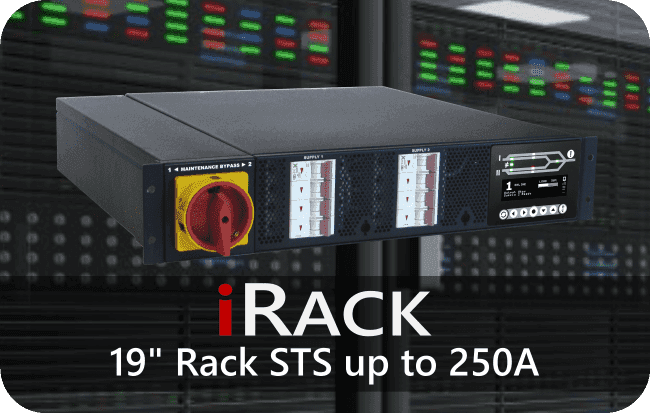
Our solid-state Static Transfer Switches (STS) are precision-engineered to protect sub-cycle sensitive loads by executing transparent, break-before-make transfers between redundant power sources. Unlike mechanical Automatic Transfer Switches (ATS) designed for raw utility-to-generator switching, our STS units utilize Silicon-Controlled Rectifiers (SCRs) to eliminate mechanical degradation and achieve transfer speeds under 4 milliseconds invisible to critical IT, medical, and industrial equipment. From 16A DIN-rail units for edge automation to 1600A centralized systems for heavy infrastructure, the iSTS range guarantees mission-critical power path redundancy.
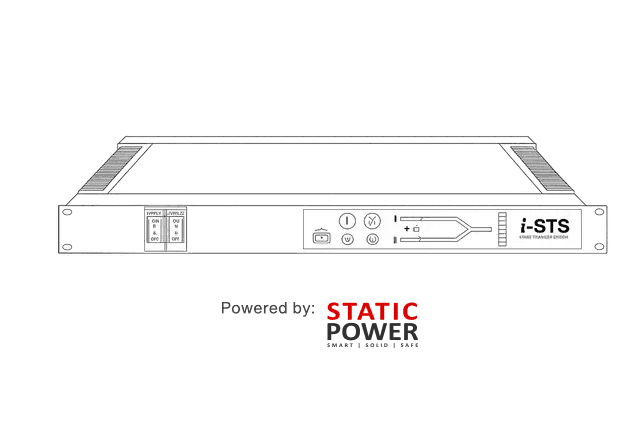
Sub-Cycle Source Transfers | Ultra-High Reliability (>800,000 MTBF)
- Broad Capacity Range: Comprehensive models spanning from 16A rail-mounted units up to 1600A centralized facility switches.
- Ultra-Fast Digital Detection: Continuous source monitoring with digital fault detection in <1 millisecond.
- Sub-Cycle Synchronous Transfers: SCRs execute Break-before-make zero current transfer in <4ms (1/4 cycle), guaranteeing zero dropped loads.
- Dynamic Asynchronous Transfers: Algorithms safely manage these transfers to prevent saturation and dangerous inrush currents in motors or transformers.
- Built-in Transient Voltage Protection: Delivers system reliability and safety
- Exceptional Reliability: Secure maximum uptime with MTBF exceeding 800,000 hours across most models, with the iRack A1 surpassing 1,000,000 hours.
- High-Level Interfacing: Seamless integration into Building Management Systems via MODBUS TCP, SNMP, HTTP, and integrated web servers.
- Some units have fuseless design: Enhances safety, reliability, and simplifies maintenance
- Product Make: STATIC POWER

Sign up to our newsletter.
Receive new product announcements, industry-relevant news and advance notice on upcoming deals.

Stay connected with us:



Products
Contact Us
- No. 47-P, KIADB Hardware Park,
Huvinayakanahalli Jala Hobli,
Yelahanka Taluk,
Bengaluru - 562149 - 1800-120-5048
- info@elmeasure.com
© 2026 Elmeasure

Loading...